Coffee Table Size: The Formula Designers Use
Coffee Table Size: The Formula Designers Use
Use sofa dimensions as a starting point, then correct for circulation, seat height, table shape, and the way the room is used.

The useful starting formulas
A coffee table often works well when its length is approximately one-half to two-thirds of the sofa’s visible length. Its top is commonly level with the seat cushion or slightly lower. A practical sofa-to-table clearance is usually about 14–18 inches, adjusted for mobility, children, table shape, and how frequently people move through the space.
Length is not enough
A table can meet the mathematical range and still feel wrong. A deep sectional may need a broader or nested surface. A narrow room may require an oval form. A visually heavy stone table can feel larger than its dimensions, while a glass or open-frame table can feel lighter.
Height
Use the sofa’s seat height as the reference. A table significantly higher can interrupt sightlines and feel awkward for lounging. A very low table can work visually but may be less practical for daily use.
Clearance
Fourteen to eighteen inches is a useful starting range between the sofa seat edge and table. Increase it for easier circulation or reduce it cautiously when reach matters more and the path does not pass through the gap.
When to use more than one table
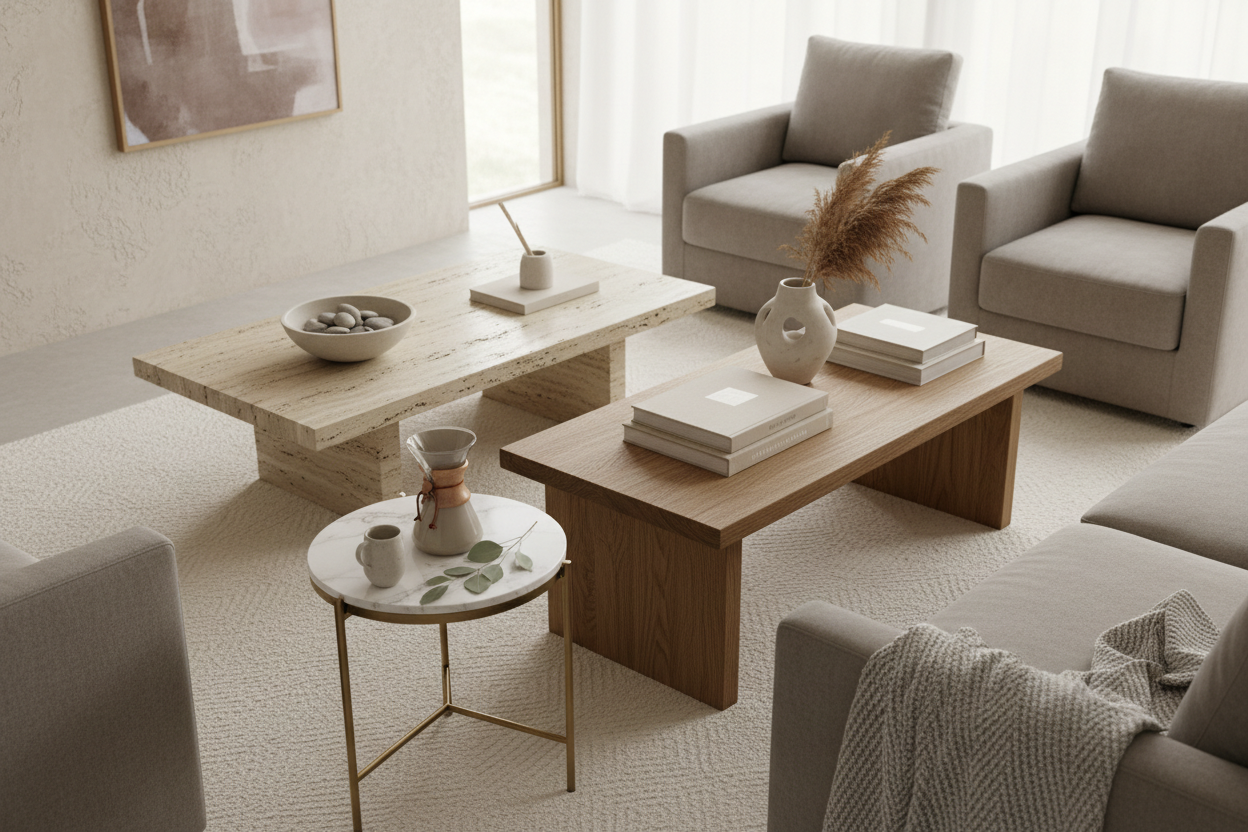
Large sectionals and broad seating groups can be better served by nested tables, two smaller tables, or a central table combined with movable side surfaces. The objective is useful reach without filling the floor.

Written by C I Flow